
Can we help you?
Contact us

Can we help you?
Contact us
Thank you for contacting us
Your form has been submitted successfully Our team will contact you again as soon as possible.
Whooppss...!! An error has occurred
Try sending later or write an email directly to areaempresas@ua.es

INFO
SHEET
DOWNLOAD
EXECUTIVE
ABSTRACT
CONTACT DETAILS: Research Results Transfer Office-OTRI
University of Alicante
Tel.: +34 96 590 99 59
Email: areaempresas@ua.es
http://innoua.ua.es
Researchers at the University of Alicante have developed a modular hybrid cultivation system (hydroponic-substrate) with a multi-layer, multi-zone structure, featuring a distributed IoT digital architecture and integrated artificial intelligence. The system enables the precise monitoring and control of each plant’s root microenvironment, autonomously optimising irrigation, nutrition and environmental conditions. Its main advantages over current solutions are the physical segmentation of the substrate into three distinct functional layers, the collaborative network between pots without a central node, and data-driven intelligent management. This innovative technology is beneficial for precision agriculture, indoor horticulture, greenhouses, vertical farming, nurseries and agronomic R&D&I projects.
We are seeking companies interested in acquiring this technology for commercial exploitation.
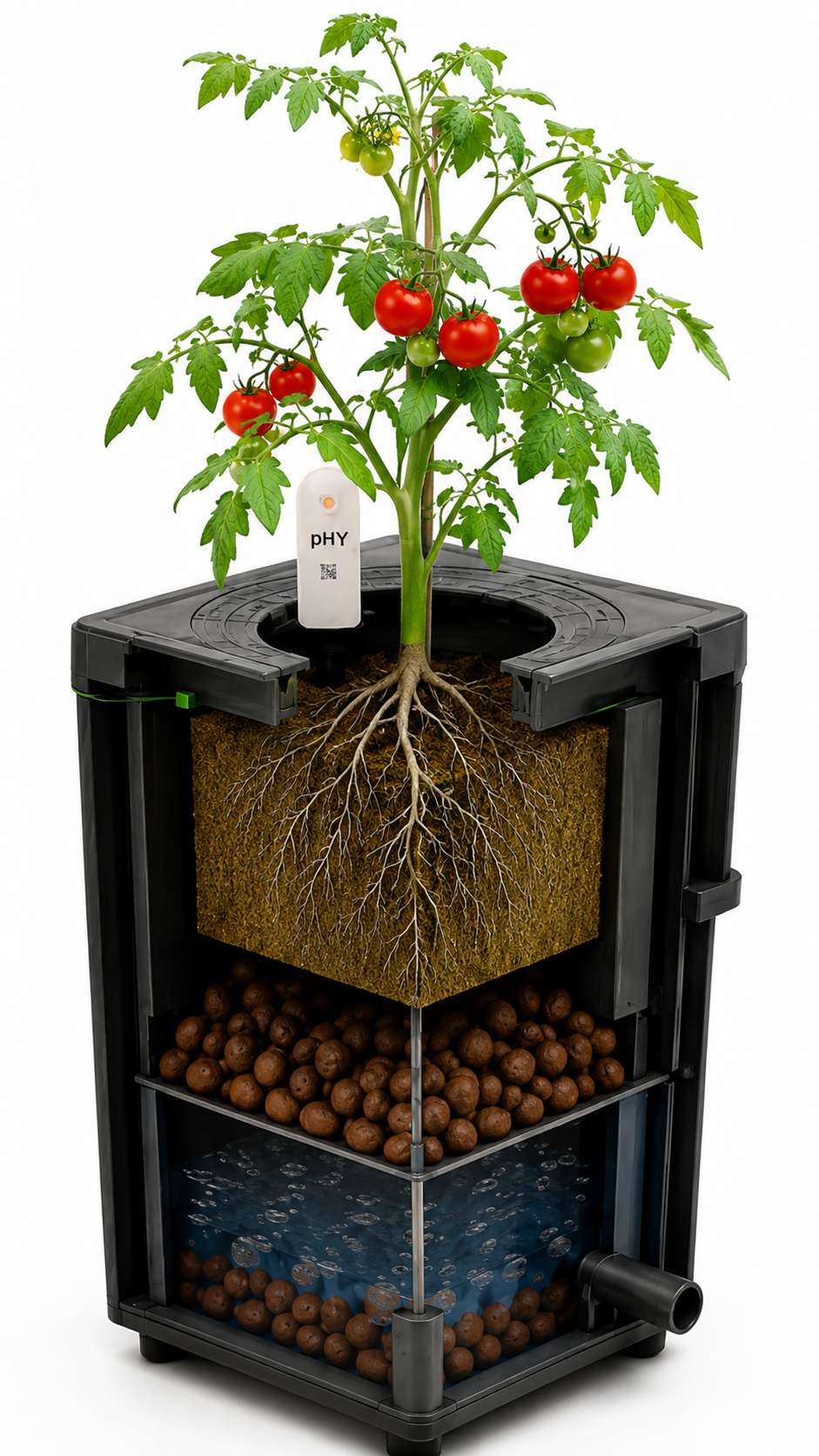
Current growing systems, both conventional ones and so-called ‘smart pots’, have structural and functional limitations that compromise the efficiency and precision of cultivation. Existing solutions on the market, such as pots with a moisture sensor connected to a mobile app or basic automated irrigation systems, do not incorporate a physical design optimised for root analysis, nor do they provide an interoperable technological architecture for distributed control across multiple devices. Furthermore, they lack compartmentalisation of the growing medium into distinct layers and zones, controlled water segmentation, and do not implement local artificial intelligence for autonomous decision-making.
In the field of hydroponic systems, there are known moisture monitoring solutions that allow irrigation to be controlled via sensors and actuators connected to the cloud, but without modular integration or autonomous network cooperation. There are also smart pots with plant identification and basic sensors, but they lack a multi-layer design accessible from the outside and distributed cooperation capabilities across multiple units.
Against this backdrop, there is a clear need for a system that combines a physical design optimised for root analysis with an interoperable technological architecture; one that provides for the segmentation of the substrate into distinct layers and zones; and that implements local artificial intelligence to make decisions in an objective, measurable and reproducible manner. The present invention addresses this need by offering a robust, interoperable and self-managed solution that overcomes the technical causes of root environment instability and operational fragility in conventional systems.
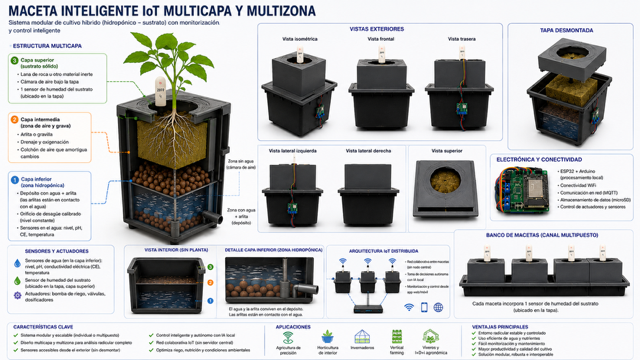
The technology developed consists of a modular, multi-layer, multi-zone hybrid planter system that incorporates a programmable hardware device with networked IoT communication interfaces to optimise crop growth autonomously and intelligently. The system can be deployed as a single planter (see Figure 1) or as a multi-station channel (see Figure 2), adapting to different production requirements.
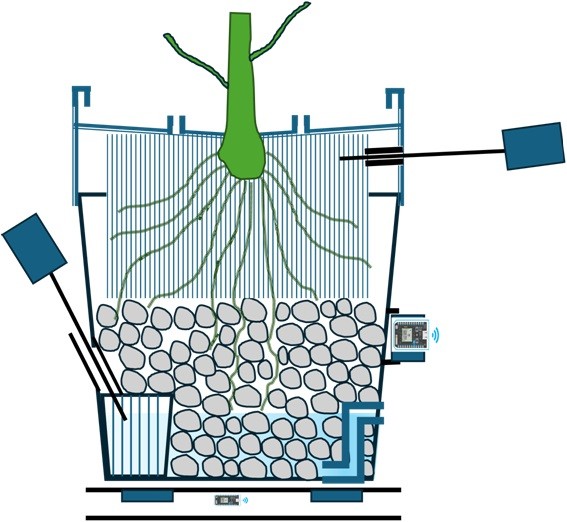
Figure 1: Side view in cross-section of the individual plant pot.
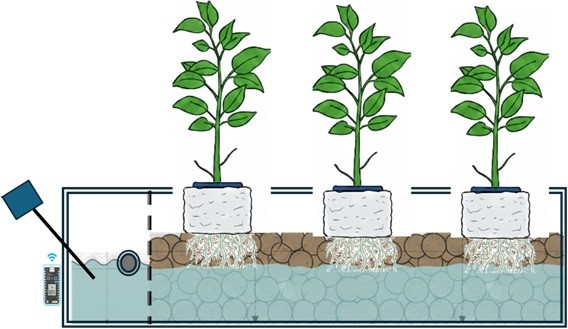
KEY FEATURES OF THE TECHNOLOGY:
Multi-layer physical structure: the growing container is divided into three layers, each with a distinct function:
1. Lower layer (hydroponic zone): consisting of a permanent water reservoir maintained at a fixed level by a calibrated drain pipe. It is divided into two zones: a reservoir of pure water and a zone where water coexists with inert material. It features holes in the side wall for inserting level, pH, electrical conductivity and temperature sensors from the outside, without the need to dismantle the pot.
2. Middle layer (air and gravel zone): situated between the lower layer and the upper layer. It consists of a fill of expanded clay or gravel. It creates an air cushion that promotes root oxygenation, acts as drainage, cushions rapid changes in humidity and temperature, and serves as a transit zone for the roots passing through it towards the lower reservoir.
3. Top layer (solid substrate zone): this houses a block of rigid solid substrate, such as rock wool or another inert material, where the plant grows. It features a removable lid with holes for microtubes and irrigation drippers, as well as holes for moisture sensors. An air chamber forms between the substrate and the lid, reducing evaporation and protecting the root environment.
Sensor and actuator system: the system incorporates sensors in multiple zones to provide comprehensive and continuous root analysis: water sensors (pH, electrical conductivity, temperature, level) in the lower layer; substrate moisture sensors at various depths in the upper layer; environmental sensors (temperature, relative humidity, light, CO2, air quality) outdoors; and, optionally, load cells at the base to estimate biomass and water consumption. The actuators include pumps and solenoid valves for irrigation, multispectral LED strips for lighting and, optionally, fans and humidifiers.
Distributed mesh IoT architecture: each pot incorporates an IoT microcontroller with wireless communication (Wi-Fi, Zigbee, Bluetooth, LoRa), and ports for sensors and actuators. The plant pots interconnect to form a collaborative mesh network (see Figure 3) that allows direct data exchange without the need to pass through a central node, thereby eliminating single points of failure. This network communicates with mobile apps, tablets or voice assistants for data visualisation and command reception.
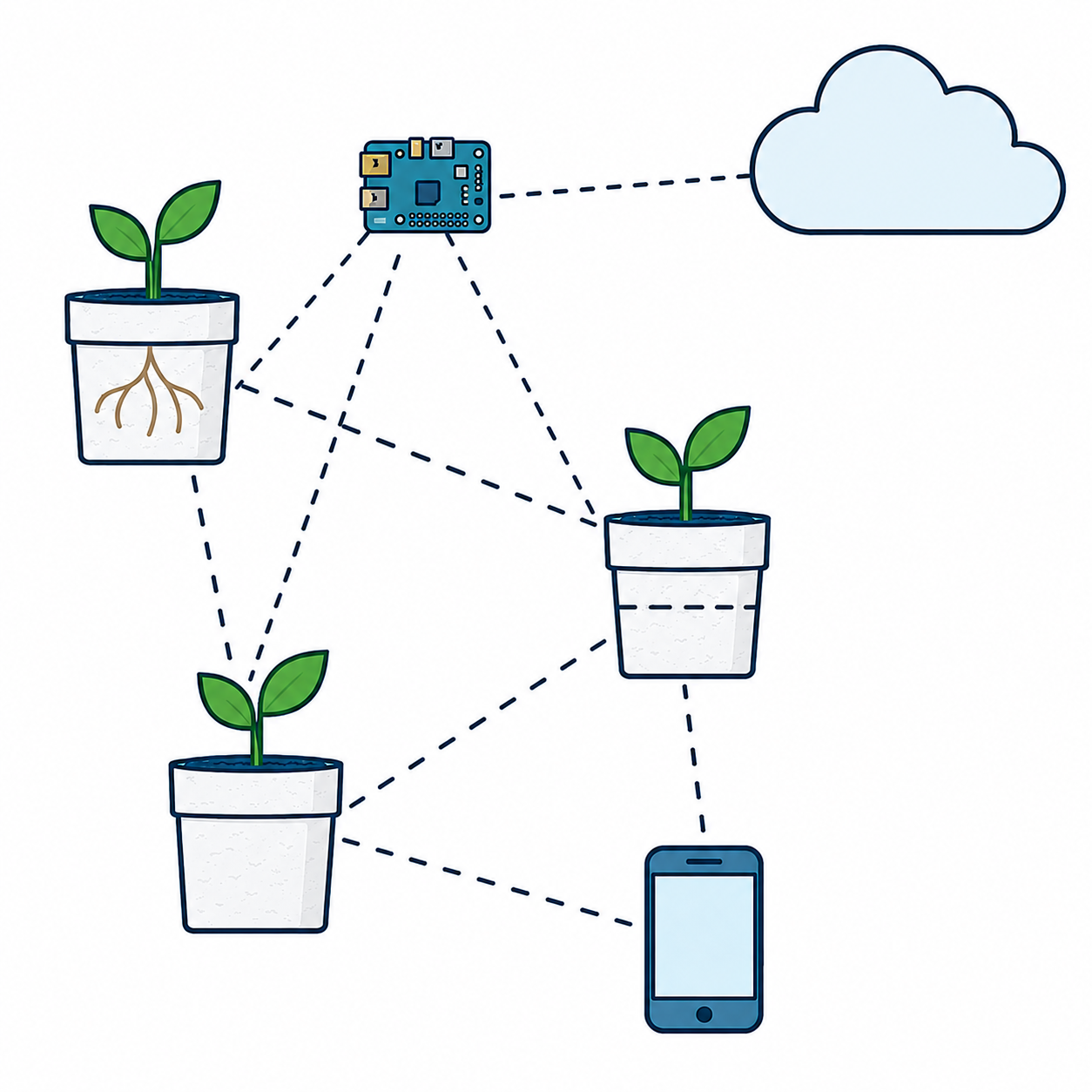
Figure 3: Schematic diagram showing the connection of several containers for growing plants.
Layered software architecture: deployed on the microcontroller and external servers, it includes:
• A data acquisition layer with periodic sensor readings and local storage.
• A communication layer using IoT protocols such as MQTT or HTTP.
• A control layer with algorithms for watering, lighting and other actions based on parameters and information from neighbouring planters.
• An artificial intelligence layer that creates and updates crop datasets to predict water requirements, detect anomalies and generate personalised recommendations.
• A user interface layer with web and mobile dashboards, messaging and voice control.
The system is scalable from a single pot to a multi-station channel, with identical functionality in both formats, ensuring traceability and individualised control of each unit.
ADVANTAGES OF THE TECHNOLOGY
This technology offers the following advantages:
1) Greater precision in crop management: the division into three functional layers allows each zone to be monitored and managed independently, optimising the use of water, nutrients and environmental conditions with unprecedented precision.
2) Significant reduction in water consumption: calibrated drainage and autonomous irrigation control prevent waterlogging and wastage, reducing water consumption by up to 40% compared to conventional systems.
3) Sensor insertion without removing the pot: pre-formed holes allow probes to be inserted from the outside without interrupting the crop or damaging the roots, facilitating maintenance and calibration.
4) Elimination of single points of failure: the distributed mesh network eliminates dependence on a central node, ensuring system continuity in the event of individual failures.
5) Full traceability by plant and phenological stage: the platform records parameters and decisions in real time, generating auditable data for regulatory compliance and quality certifications.
6) Reduced operating costs: intelligent automation reduces the need for labour for monitoring and manual adjustments.
7) Scalability and adaptability: the modular design allows for a transition from pot-based to multi-batch channel formats without altering the technological architecture, adapting to different production scales.
8) Lower environmental impact: reduced water and fertiliser consumption, combined with a lower risk of contamination from leachates, contributes to more sustainable and environmentally friendly production.
INNOVATIVE ASPECTS OF THE TECHNOLOGY
The main innovation of this technology lies in the synergistic combination of three elements which, until now, had not been integrated into a single system:
1. A multi-layer physical design with external access to the sensors without the need to dismantle the plant pot.
2. A distributed mesh IoT network between plant pots with no central node.
3. A layer of local artificial intelligence with traceability by plant and phenological stage.
Unlike existing solutions that offer an optimised physical design without advanced connectivity or integrate basic IoT without functional compartmentalisation of the substrate, this invention simultaneously addresses all the technical causes of instability in the root microenvironment. The result is a system that monitors all parameters in real time, learns, predicts and acts autonomously, generating added value for the farmer.
From an industrial property perspective, no patent known to date combines externally accessible multi-layer compartmentalisation, networked cooperation without a central node between multiple growing units, and local artificial intelligence integrated into the pot’s hardware, which gives this invention a solid and differentiated competitive position in the smart growing systems market.
A validated functional prototype (Technology Readiness Level – TRL 5) has been successfully developed in a single-plant pot format, integrating sensor, actuator and IoT communication systems. The prototype has been evaluated under real-world growing conditions, verifying the correct operation of the three functional layers: insertion, external sensor reading and network communication between multiple units.
The tests carried out include:
1. Continuous monitoring of parameters in the lower layer: pH, electrical conductivity, temperature and water level.
2. Measurement of moisture profiles at different depths in the top layer substrate.
3. Automated irrigation control via solenoid valves and pumps.
4. Wireless communication between multiple networked plant pots.
5. Real-time data visualisation via the mobile app.
The results obtained confirm the stability of the system, the accuracy of the measurements and the viability of the distributed IoT architecture.
As next steps in development, we plan to carry out larger-scale validation in professional greenhouse environments (TRL 6–7) and to incorporate artificial intelligence models trained on real crop datasets for advanced prediction of water requirements and early detection of anomalies.
This innovative technology is particularly beneficial for the following industrial sectors:
• Precision agriculture: greenhouses, vertical farming and indoor farming with multi-zone control of irrigation, nutrients, data and artificial intelligence.
• Forest and ornamental nurseries: it promotes uniform rooting, traceability per plant and a reduction in losses.
• Floriculture and ornamental production: improved quality control, uniform flowering, precise irrigation, and batch and plant-level recording.
• Food horticulture (leafy vegetables, herbs, microgreens): stabilises electrical conductivity and pH, and reduces health risks.
• Medical cannabis production (GACP/GMP): ensures traceability by phase, as well as environmental and nutritional control. Serves as support for regulatory validation.
• Medicinal plants, nutraceuticals and cosmetics: standardisation of metabolites, reproducible batches and auditable records.
• R&D&I and trials (universities, technology centres, nurseries): phenotyping, comparative trials and digital twins.
• Urban landscaping and smart cities (green roofs, vertical gardens): remote maintenance, water savings and reporting.
• Water management and treatment: enables optimised dissolution and selective purging. Reduces biofilm formation and the accumulation of mineral salts.
• Agricultural insurance and traceability: objective data is collected by plant and phenological stage for the purposes of expert assessments and regulatory compliance.
Companies interested in acquiring this technology for commercial exploitation through patent licensing agreements are sought.
Company profile sought:
• Manufacturers of technical horticulture products.
The present invention is protected through patent application:
• Patent title: "Recipiente para el cultivo de plantas".
• Application number: P202630082.
• Application date: 26th January 2026.
Biodiversity and Landscape
Computer Science, Language and Communication
Water Resources


Carretera San Vicente del Raspeig s/n - 03690 San Vicente del Raspeig - Alicante
Tel.: (+34) 965 90 9959