
Can we help you?
Contact us

Can we help you?
Contact us
Thank you for contacting us
Your form has been submitted successfully Our team will contact you again as soon as possible.
Whooppss...!! An error has occurred
Try sending later or write an email directly to areaempresas@ua.es

 PATENTED TECHNOLOGY
INFO
SHEET
DOWNLOAD
EXECUTIVE
ABSTRACT
CONTACT DETAILS: Research Results Transfer Office-OTRI
University of Alicante
Tel.: +34 96 590 99 59
Email: areaempresas@ua.es
http://innoua.ua.es
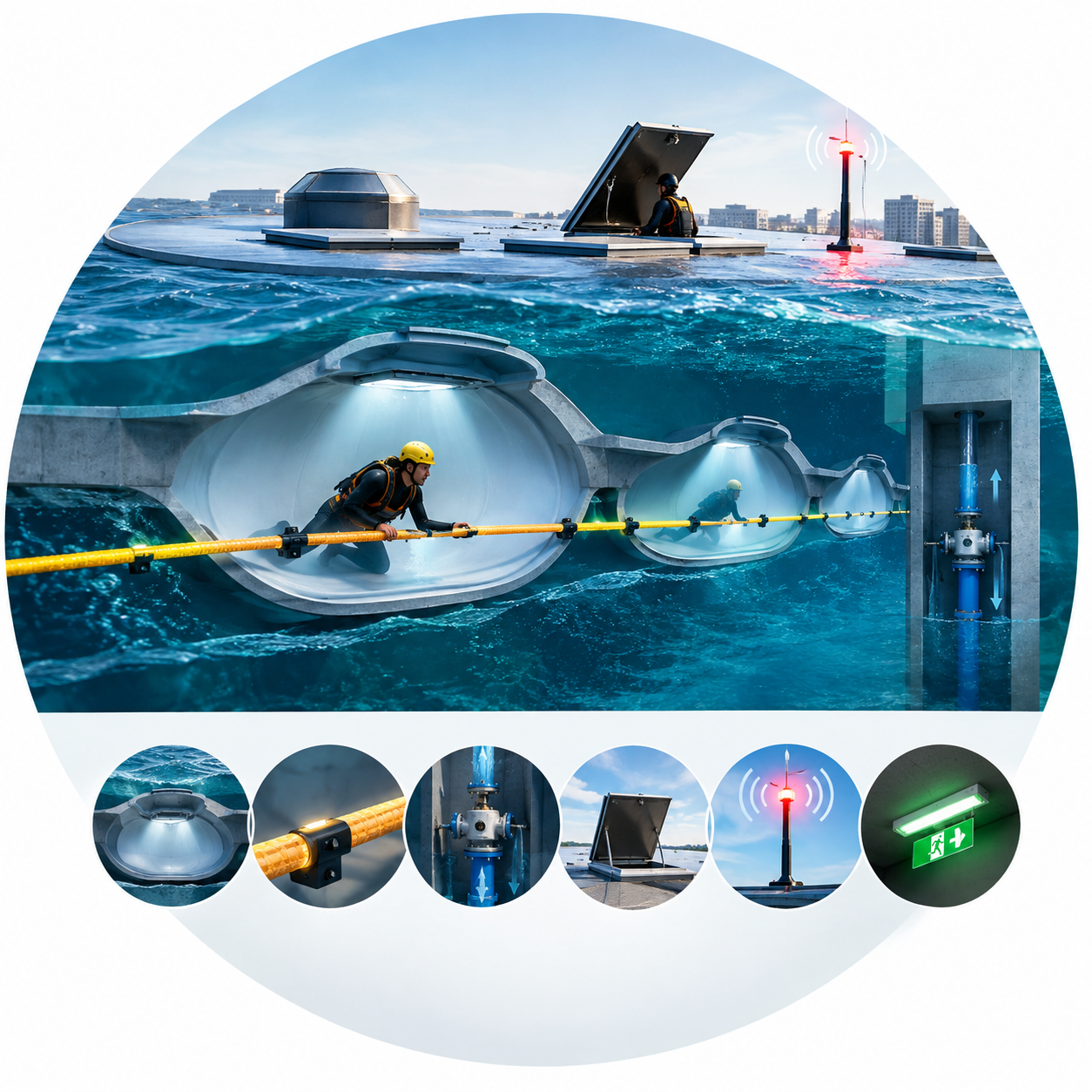
Researchers at the University of Alicante have developed an innovative flood evacuation system that transforms the ceilings of buildings and tunnels into a safe escape route by means of concave cavities that retain air thanks to water pressure. The cavities allow occupants to breathe without the need for active equipment, and are connected by a rigid, textured lifeline that guides occupants to the exit, even in conditions of zero visibility.
The system is complemented by pressure valves to balance water levels between spaces, hatches accessible from the ceiling, telecommunications beacons to alert rescue teams, and signalling and lighting devices. The modular and scalable design is suitable for both new builds and refurbishments, ensuring a rapid and reliable evacuation in the event of flooding.
The civil engineering and safety architecture sector faces a critical challenge when a building or underground infrastructure is rapidly flooded. Existing evacuation systems are designed primarily for fires, where clean air remains “at ground level”, or for open-water rescues, and none of them are optimised for confined spaces that fill with water up to the ceiling. Among the current systems, the following are particularly noteworthy:
• Diving bells: these use hydrostatic pressure to contain a volume of air, but their heavy construction and mobile design make them impractical as a permanent structural element within a building or tunnel.
• Airtight enclosures: used in mining, they can isolate occupants from toxic atmospheres, but rely on chemical or mechanical air-regeneration systems; if these fail, suffocation is inevitable and they offer no means of escape when rescue is delayed.
• Personal flotation devices (“life jackets”): these are designed to keep the airways above water, but are counterproductive in a flooded space: their positive buoyancy pushes users against the ceiling, restricting mobility and making it difficult to locate exits situated at lower levels.
Flexible lifelines or cables pose a risk of becoming entangled with furniture and objects swept away by the current. Furthermore, when they are smooth, they lose friction if covered in mud or oil, preventing the user from exerting the necessary force to move against the current or maintain their position beneath an air pocket. The lack of tactile indicators also makes it difficult to find one’s bearings in conditions of zero visibility.
Overall, these systems lack a passive and reliable mechanism to guarantee the immediate availability of breathable air and a safe route to the exit when the water rises to the ceiling. The present technology proposes precisely that: inverted concave cavities installed in the ceiling that retain air through hydrostatic pressure and are connected to the exit by a rigid lifeline with a non-slip texture and tactile and luminous guide elements. This solution eliminates the need for an external power source, reduces the risk of suffocation and provides a predetermined and accessible escape route, even in completely dark or murky environments.
Managing flood emergencies in confined spaces, such as tunnels, underground car parks or buildings with basements, has historically been a technical challenge. Conventional systems, such as diving bells, airtight chambers or individual flotation devices (life jackets), are designed for very different contexts: open water, mining or surface fires. When water floods an enclosed structure, the lack of breathable air and the difficulty of moving against the current mean that victims become trapped with no possibility of rapid evacuation.
This innovative technology proposes a radically different approach: converting the ceiling of the flooded enclosure into a “ceiling-level” escape route using inverted concave cavities and a rigid lifeline (see Figure 1). The underlying physical principle is passive hydrostatic retention. As the water rises, it compresses the air trapped inside each cavity and creates a permanent breathable volume without the need for mechanical systems or external energy, thereby eliminating the risk of mechanical or energy-related failure.
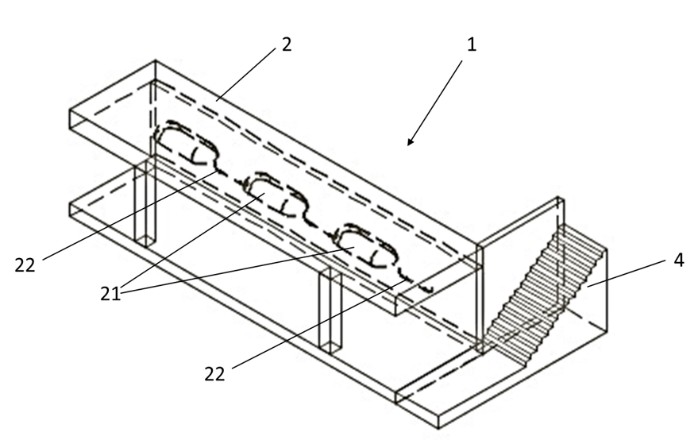
Figure 1: Isometric perspective view of a section of underground infrastructure (such as a tunnel or car park) fitted with the system of the invention, showing its arrangement on the ceiling and the location of the lifeline.
The cavities, which can take various forms (prismatic, hemispherical, cylindrical or other more complex shapes, such as truncated cones with rounded ends), are embedded in the ceiling and are designed to capture a volume of air between 0.34-1.70 m³. The elongated design facilitates alignment with the lifeline and allows people moving underwater to pass through easily. The diagram (see Figure 2) illustrates how the geometry prevents stress concentrations and reduces the likelihood of structural collapse when the ceiling is subjected to hydrostatic load.
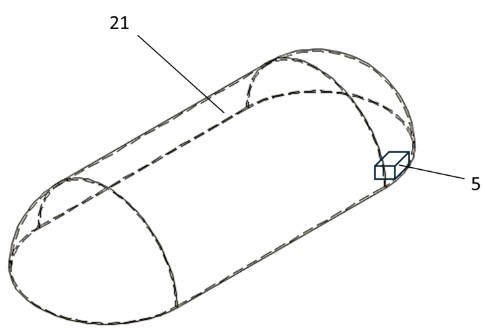
Figure 2: Perspective view of an example of a cavity.
Importance of the interconnection of the cavities: the patent proposes a rigid lifeline (see Figure 3), consisting of a metal tube or bar with tactile guide elements, which is installed parallel to the ceiling and whose surface is textured to maintain an adequate coefficient of friction.
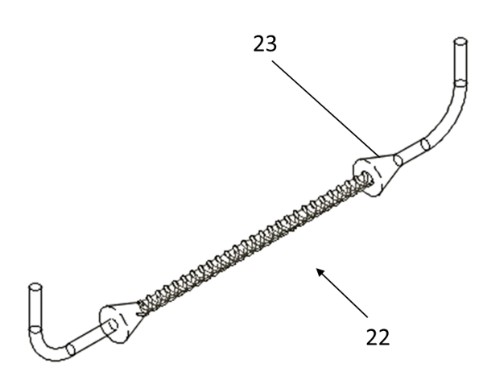
Figure 3: Close-up view of a section of the lifeline showing the high-friction surface texture (corrugated/knurled) and the tactile guidance features.
In areas where traditional doors are blocked by water, hatches aligned with the waterline are installed (see Figure 4). These hatches allow occupants to pass through without having to open a door that is being pushed by water pressure. Pressure-equalising valves are fitted beneath each hatch; these open automatically when the pressure difference exceeds a predefined threshold, thereby regulating the flow between compartments without human intervention or the need for electrical power.
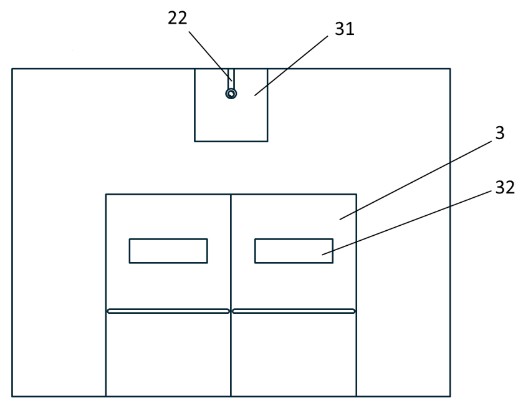
Figure 4: Schematic front view of an emergency access point, showing two valves and a gate.
To complement passive safety, the patent includes autonomous beacons fitted with oxygen, carbon dioxide and absolute pressure sensors, as well as a communication module. When the sensor detects critical conditions, it emits a signal that guides rescue teams to the affected cavity.
The system’s versatility is reflected in its ability to be installed in both new-build and refurbishment projects. In new builds, the cavities can form part of the permanent formwork, whilst in existing buildings they are secured using mechanical or chemical anchors that support the buoyancy load.
In summary, the proposed system transforms the ceiling of a flood-prone area into a safe and self-contained evacuation route by utilising hydrostatic pressure to maintain breathable air, providing a secure escape route with a firm grip and offering active telemetry. The combination of concave cavities, the rigid lifeline with tactile guidance, the hatches and the communication beacons transforms any building or underground infrastructure into a safer environment in the face of the threat of unexpected flooding.
This technology offers a comprehensive solution that overcomes the limitations of traditional devices, including:
• The lack of escape routes in the event of flooding, as traditional systems (“ground-level evacuation” or staircases) become inaccessible when water covers the exits.
• Reliance on power and maintenance for airtight chambers or flotation devices, which require an electrical supply, batteries, air regenerators or manual intervention that may fail under extreme conditions.
• Disorientation in environments with turbidity, poor lighting or darkness, as the absence of light and the presence of currents make it difficult for occupants to find their bearings.
ADVANTAGES OF THE TECHNOLOGY
By combining the physical principles of fluid mechanics with a robust, user-centred design, this innovative technology provides a practical and reliable way of protecting people from flash floods. Its implementation can significantly reduce the risks of suffocation and disorientation, improve emergency response and meet increasingly stringent structural safety regulations.
The main advantages of this technology are:
1. Ensures breathing is maintained during floods thanks to air chambers generated by hydrostatic pressure, without the need for energy or mechanical systems.
2. Enables evacuation “at ceiling level” via a rigid lifeline with tactile and luminous markings, which operates even in complete darkness.
3. The textured surface of the lifeline provides a secure grip, even when wet or dirty, facilitating survival against the current and in mud or oil.
4. It eliminates the need to open jammed doors or wear life jackets, reducing the risk of entrapment and facilitating passage through flooded spaces.
5. Pressure-equalising valves between compartments balance the flow of water without requiring external power, preventing dangerous currents and making it easier to open floodgates.
6. Watertight beacons with telecommunications capabilities transmit the location and air quality to rescue teams.
7. The modular design allows for installation in both new-build and refurbishment projects, reducing costs and response times without altering the building’s structure.
8. As a passive system, it does not rely on an external power supply nor does it incorporate electromechanical mechanisms, thereby minimising failures and ensuring continuous operation during emergencies.
9. It does not require electricity to supply air, which reduces the building’s operating costs and environmental footprint.
10. It facilitates the self-evacuation of occupants without the need for specialised training, thereby improving community safety and confidence in disaster management.
INNOVATIVE ASPECTS
The system transforms the roofs of flood-prone buildings into a safe evacuation route without the need for prior training. By installing inverted concave cavities, water pressure compresses and traps breathable air within them, creating static shelters that require neither energy nor active maintenance.
A rigid lifeline, with a textured surface and tactile markers, guides occupants towards the exit, even in conditions of poor visibility.
Pressure gates and valves control the flow of water between spaces and allow people to pass through, whilst telecommunication beacons alert emergency teams to the presence and quality of the air.
This passive approach overcomes the limitations of airtight chambers, submersible bells and life jackets, offering greater reliability and autonomy.
The flood evacuation system described here is an innovative solution that combines inverted concave cavities in the ceiling with rigid, guided lifelines, floodgates and pressure-equalisation valves. The proposal is based on the principle of passive hydrostatic retention to create zones of breathable air without the need for an external power supply, supplemented by autonomous telemetry and telecommunications devices.
To date, the technological development phase has completed the system design, and full-scale prototypes have been built, with which laboratory experiments have been carried out, confirming the response of the cavities and their ability to retain breathable air. Consequently, the Technology Readiness Level (TRL) stands at TRL=4, that is, at the stage of laboratory component validation, with a need to progress to pilot tests on a larger scale to confirm structural viability, the effectiveness of air retention and the operability of the communication systems under actual flooding conditions.
Types of companies:
1. Construction companies specialising in new-build and refurbishment projects for:
• Underground infrastructure: tunnels, underground and railway stations, car parks, underground roads, industrial plants and shopping centres with underground spaces.
• Residential, commercial and industrial buildings: basements, attics and structures at risk of flooding due to storms or hydraulic failures.
• Critical facilities: hospitals, laboratories and data centres where operational continuity is essential.
• Refurbishment projects: can be installed as an add-on in existing buildings without altering their main structure.
2. Suppliers of security solutions for critical facilities (batteries, treatment plants, power stations, etc.).
3. Public authorities and natural risk management bodies.
We are seeking companies interested in acquiring this technology for commercial exploitation through patent licensing agreements, as well as organisations interested in advancing the development of the technology that have the financial resources and/or suitable facilities to design full-scale pilot trials or collaborate in any of the areas required by the project.
Company profile sought:
Companies with the technical capability to integrate security and evacuation solutions, which have experience in critical infrastructure or construction projects, and which are willing to collaborate on the adaptation and implementation of the system in various contexts (new-build and refurbishment).
The organisation must have the financial and operational resources to manage licences, collaborate on pilot trials and deploy the technology on a large scale, as well as demonstrate a proven track record of regulatory compliance in the areas of civil protection and industrial safety.
This invention is protected through a patent application:
• Patent title: “Sistema de emergencia y evacuación frente a inundaciones”.
• Application number: P202630926.
• Application date: 26th June 2026.


Carretera San Vicente del Raspeig s/n - 03690 San Vicente del Raspeig - Alicante
Tel.: (+34) 965 90 9959