
Can we help you?
Contact us

Can we help you?
Contact us
Thank you for contacting us
Your form has been submitted successfully Our team will contact you again as soon as possible.
Whooppss...!! An error has occurred
Try sending later or write an email directly to areaempresas@ua.es

 PATENTED TECHNOLOGY
INFO
SHEET
DOWNLOAD
EXECUTIVE
ABSTRACT
CONTACT DETAILS: Research Results Transfer Office-OTRI
University of Alicante
Tel.: +34 96 590 99 59
Email: areaempresas@ua.es
http://innoua.ua.es
Researchers at the University of Alicante, in collaboration with the Teófilo Hernando Foundation, have described, in a mouse model that replicates retinitis pigmentosa, a new use for the drug duloxetine in the treatment and prevention of degenerative retinal diseases. Conditions such as retinitis pigmentosa, central areolar choroidal dystrophy, glaucoma, diabetic retinopathy, macular degeneration and retinopathy associated with both Alzheimer’s disease and Parkinson’s disease could potentially benefit from this treatment.
Pharmaceutical companies interested in supporting the development of further studies, as well as its commercial exploitation, are sought.

Eye diseases that lead to retinal degeneration (such as glaucoma, age-related macular degeneration, diabetic retinopathy, retinitis pigmentosa, central areolar choroidal dystrophy, and retinopathies associated with Alzheimer’s and Parkinson’s diseases, amongst others) usually result in serious vision problems, and in many cases to blindness, which has a significant social, health and economic impact, resulting in a very poor quality of life for patients.
Although these diseases have different causes (genetic defects, increased intraocular pressure, high blood glucose levels, stress or ageing), the mechanisms of response to injury at the cellular and molecular levels are similar across all of them. All these factors frequently induce a set of cellular signals that lead to well-established and similar morphological and functional changes, such as programmed cell death and retinal remodelling.
Cell death in specific degenerative retinal diseases and in other neurodegenerative diseases (such as Alzheimer’s and Parkinson’s diseases, amongst others) does not differ significantly; consequently, the pharmacological targets under investigation are similar in both types of disease.
Current treatments are of limited effectiveness and fail to halt the progression of these diseases; hence the need to provide more effective drugs to treat retinal degeneration that are capable of delaying, preventing and even reversing photoreceptor degeneration and the resulting loss of vision.
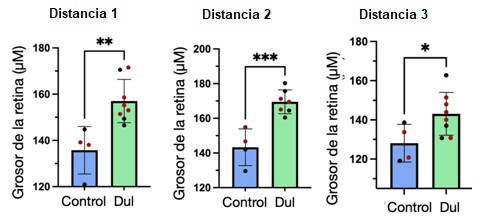
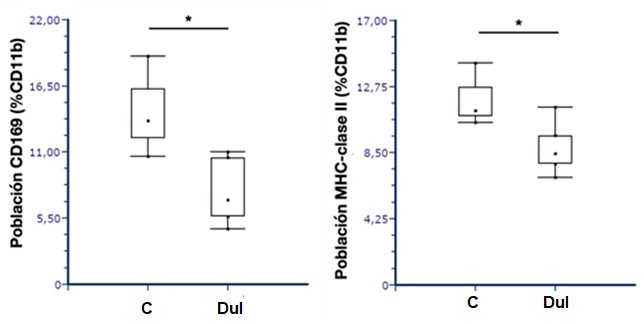
In the present invention, it has been demonstrated that duloxetine provides in vivo protection of the retina in an experimental mouse model that mimics human retinitis pigmentosa (rd10), being capable of improving both the functionality (see Figure 1) and the structure of the retina (see Figure 2), as well as reducing inflammatory markers (see Figure 3).
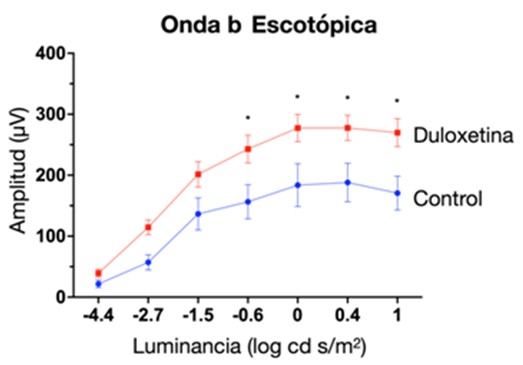
Figure 1: Stimulus-response curves of photoreceptors (wave b) measured using scotopic electroretinograms (ERGs) from rd10 mice treated with vehicle (control, 5 animals) or with 10 mg/kg of duloxetine (7 animals).
Duloxetine may be used on its own or as part of a pharmaceutical formulation. Furthermore, it may contain a carrier or excipient to aid absorption, stabilisation, manufacture, or to bind the other ingredients together, or to provide consistency, shape, flavour or any other specific functional characteristic, amongst other things.
This compound or pharmaceutical composition may be administered by ocular, oral, rectal, nasal, topical, subcutaneous, intradermal, intramuscular, intracranial, intravenous or intraperitoneal routes, although it is preferably administered as a solution in the form of eye drops, or as an injection via the intraocular, intravitreal, subconjunctival, retrobulbar or any other route. Furthermore, administration may also take the form of an ocular implant comprising the pharmaceutical composition, and may be made of a porous, non-porous or gelatinous material, which may include membranes or fibres.
This development is still at the stage of fundamental biological research in a specific animal model (early preclinical phase).
To progress from this point towards the commercialisation or clinical use of duloxetine in the prevention and/or treatment of degenerative retinal diseases, the following sequential phases and steps must be completed:
A. DEVELOPMENT PHASE (TRL 4 – TRL 6):
• Consolidate TRL 4 (in vitro and in vivo laboratory/preclinical validation):
1. Dose-response studies: Assess whether doses below 10 mg/kg maintain efficacy, or whether higher doses optimise the effect without causing retinal or systemic toxicity.
2. Therapeutic time window: To investigate what happens if treatment is extended beyond P25, or if it is initiated at earlier or later stages.
3. In-depth mechanism of action: To determine why duloxetine (a serotonin and noradrenaline reuptake inhibitor) specifically reduces markers such as CD169 and MHC-II in the retina.
• Achieve TRL 5 and TRL 6 (validation and demonstration in a relevant setting):
4. Validation in other animal models: Retinitis pigmentosa is genetically highly heterogeneous. It is crucial to test duloxetine in other models (for example, the rapidly progressing rd1 mouse, or dominantly inherited models such as the P23H mouse) to demonstrate that the neuroprotective effect is not exclusive to the rd10 mouse mutation.
5. Ocular toxicity and pharmacokinetic studies (GLP): To assess long-term ocular safety. As duloxetine is already approved for systemic use (as an antidepressant), its general safety is known, but its ongoing retinal safety at chronic doses must be validated.
6. Optimisation of the route of administration: Daily intraperitoneal administration is not feasible in humans for chronic conditions. Research is needed into other, more realistic routes of administration (e.g. eye drops containing specific carriers, intravitreal injections or sustained-release implants).
B. ROLL-OUT AND MARKET PHASE (TRL 7 – TRL 9):
• Reach TRL 7 (Phase I and Phase II clinical trials):
• Phase I (safety): Assess the safety and tolerability of the drug (or the new ophthalmic formulation) in a small group of healthy volunteers or patients with the condition.
• Phase II (early efficacy): Test the drug in a larger group of patients with retinitis pigmentosa to monitor whether it slows visual loss using visual acuity tests, visual field tests or OCT in humans. As duloxetine is already an approved drug for human use, the time and regulatory risk in this phase can be significantly reduced.
• Achieving TRL 8 and TRL 9 (Phase III clinical trial, registration and marketing):
• Phase III (large-scale confirmation): Conduct an international, multicentre study involving hundreds of patients to confirm, statistically and unequivocally, that the treatment slows the progression of blindness compared with a placebo.
• Regulatory approval: Submit the scientific and clinical report to the relevant agencies (such as the EMA in Europe or the FDA in the US) to obtain marketing authorisation for this new medical indication (TRL 8).
• Market launch: Industrial production and commercial distribution of the medicinal product so that ophthalmologists can prescribe it (TRL 9).
Since duloxetine is already an approved medicine for human use, the regulatory process may be shorter if drug repositioning is chosen.
ADVANTAGES OF THE TECHNOLOGY
The use of duloxetine as a neuroprotective agent for the retina offers the following advantages:
• Effective results obtained in the murine model (rd10) in the treatment and prevention of neurodegenerative diseases of the retina.
• Improved functional response of the retina.
• Reduces loss of retinal thickness.
• Prevents inflammation of retinal cells.
INNOVATIVE ASPECTS
Duloxetine (see Figure 4) is a chemical compound that acts as an antidepressant by inhibiting the reuptake of serotonin and noradrenaline.
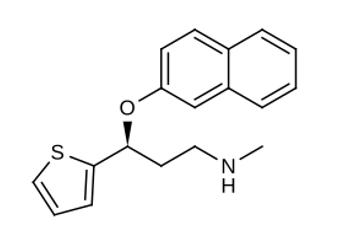
Figure 4: Chemical structure of duloxetine.
Duloxetine works by increasing the levels of serotonin and noradrenaline to maintain mental balance and block the transmission of pain signals in the brain. Duloxetine is currently used to treat depression, generalised anxiety disorder, pain associated with diabetic neuropathy, fibromyalgia, and also to treat chronic bone or muscle pain (such as lower back pain or osteoarthritis). It is also sometimes used to treat stress urinary incontinence in women.
Among the uses proposed to date for duloxetine, there is no indication whatsoever of its potential in the treatment and/or prevention of neurodegenerative diseases in general, nor, specifically, of degenerative eye diseases. In fact, its use was even discouraged in certain types of glaucoma.
Therefore, the present invention describes the innovative use of duloxetine as an effective medicine for the treatment and/or prevention of the following degenerative retinal diseases: retinitis pigmentosa, central areolar choroidal dystrophy, glaucoma, diabetic retinopathy, macular degeneration, retinopathy associated with Alzheimer’s disease and retinopathy associated with Parkinson’s disease.
The neuroprotective effect of duloxetine on retinal degeneration has been studied in an animal model of autosomal recessive retinitis pigmentosa (the rd10 mouse). In this model, degeneration progresses more slowly than in other models (photoreceptor cells in the rd10 mouse are lost over a period of weeks rather than days: photoreceptor loss begins at approximately two weeks of age, with a peak in cell death on postnatal day 25). The rd10 model is therefore the most suitable for testing new therapies for the treatment of retinitis pigmentosa.
Duloxetine was administered at a dose of 10 mg/kg, intraperitoneally, once daily, from postnatal day 18 (P18; onset of retinal cell degeneration) until postnatal day 25 (P25; intermediate-to-advanced stage of degeneration).
Stimulus-response curves were analysed using electroretinography (ERG) in rd10 mice treated with vehicle (control) and with duloxetine at 10 mg/kg, from postnatal day 18 to postnatal day 25. As shown in Figure 1, the mean values of the scotopic b-wave were higher in rd10 mice treated with duloxetine. The greater amplitude of the ERG stimulus-response curve in rd10 mice treated with duloxetine compared with those treated with the vehicle indicates a statistically significant improvement in the functional response of the retina.
Retinal thickness was also measured using optical coherence tomography (OCT) at three distances from the optic nerve. As shown in Figure 2, retinal thickness was significantly greater in rd10 mice treated with duloxetine. This effect was observed at all three distances.
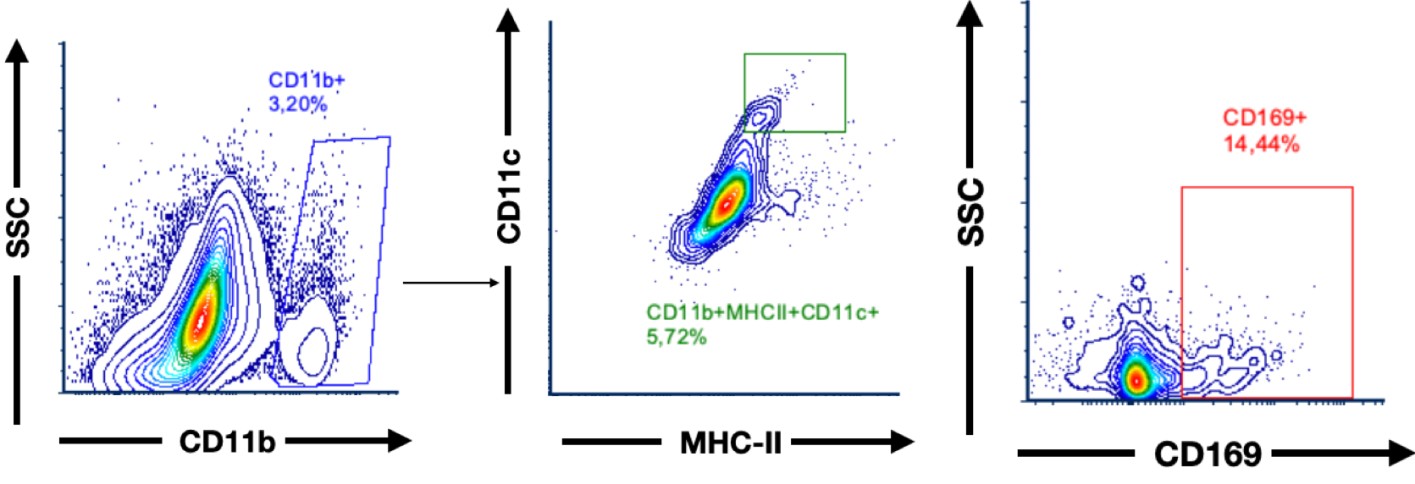
Finally, the expression of inflammation-related proteins was analysed. The inflammatory status in the retina can be assessed by studying the expression of inflammation-associated proteins (CD11b, CD11c, CD169 and the major histocompatibility complex (MHC) class II) on the cell surface. As shown in Figure 3, rd10 mice treated with duloxetine exhibited lower expression of the inflammation-associated markers CD169 and class II MHC.
Consequently, this invention is at a Technology Readiness Level (TRL) of 3 (experimental proof of concept).
In in vivo tests carried out using the retinitis pigmentosa model (rd10 mouse), duloxetine preserved visual responses compared with the control group when administered at a dose of 10 mg/kg, once daily, by intraperitoneal injection, from postnatal (P) day 18 to P25. Specifically, it preserved the amplitude of the scotopic b-wave of the ERG and retinal thickness. It also reduced the population of cells expressing pro-inflammatory markers.
Although the drug has only been tested experimentally in mice (the rd10 model), it has the potential to be applied both to humans of any age and to animals (cows, horses, pigs, sheep, goats, dogs, cats, rodents, etc.).
We are seeking companies interested in acquiring this technology for commercial exploitation through patent licensing agreements. Interested companies must have the financial resources and suitable facilities to design full-scale pilot trials and to carry out the phases required by the project.
Profile and type of company sought:
Pharmaceutical companies specialising in the prevention and/or treatment of degenerative retinal diseases, including:
• Pigmentary retinopathy.
• Central areolar choroidal dystrophy.
• Glaucoma.
• Diabetic retinopathy.
• Macular degeneration.
• Retinopathy associated with Alzheimer’s disease.
• Retinopathy associated with Parkinson’s disease.
This invention is protected by a patent application:
• Patent title: “Duloxetina para el tratamiento de enfermedades degenerativas de la retina”.
• Application number: P202631069.
• Date of application: 24th July 2026.
Pharmacology, Cosmetics and Ophthalmology
Medicine and Health


Carretera San Vicente del Raspeig s/n - 03690 San Vicente del Raspeig - Alicante
Tel.: (+34) 965 90 9959