
Can we help you?
Contact us

Can we help you?
Contact us
Thank you for contacting us
Your form has been submitted successfully Our team will contact you again as soon as possible.
Whooppss...!! An error has occurred
Try sending later or write an email directly to areaempresas@ua.es

INFO
SHEET
DOWNLOAD
EXECUTIVE
ABSTRACT
CONTACT DETAILS: Research Results Transfer Office-OTRI
University of Alicante
Tel.: +34 96 590 99 59
Email: areaempresas@ua.es
http://innoua.ua.es
The Joint Research Unit for Biomedical Design and Manufacturing (BioFab), consisting researchers from the University of Alicante and the Alicante Institute for Health and Biomedical Research (ISABIAL), has developed a new multifunctional upper limb prosthesis designed for people with agenesis, or the complete absence, of the brachial segment and the elbow joint. The lack of self-sufficiency experienced by these individuals has a significant impact on their mental health, negatively affecting self-esteem and generating feelings of inferiority. All of this can lead to social isolation, as well as increased stress, anxiety and, in some cases, the development of depressive symptoms. Therefore, thanks to this customisable and adaptable prosthesis, they will be able to perform basic activities of daily living (BADL) such as eating, dressing or writing independently.
BioFab is seeking manufacturers of assistive and rehabilitation products interested in validating and exploiting it (through licensing agreements) or in designing other new devices.

Currently, upper limb prostheses can be divided into two main types:
• Complex prostheses such as the ‘Hero Arm’ by OpenBionics or the ‘Dynamic ARM’ by Ottobock. These are highly complex prostheses that may incorporate myoelectric sensors, motors and even specialised software designed to simulate the functionality of the arm. The main problem with these is their high cost, which is unaffordable for many families; in some cases, the prostheses’ battery life is very limited, requiring them to be recharged several times a day.
• Non-conventional customised prostheses such as the “SuperGiz” project. These are customised prostheses manufactured using 3D printing that share the same philosophy of gadgets adapted for everyday functions. Their main limitation is that only the gadget is interchangeable, and it is not versatile or adaptable to different users, meaning that different models must be manufactured depending on the length of the limbs. This makes it difficult for a single device to adapt easily to different gadgets, increasing both manufacturing costs and the costs borne by the end user. Furthermore, the materials used in the socket make it heavy and uncomfortable, so users tend not to use it in the long term.
The device of the invention is based on a modular system (see Figure 1) that enables its multifunctionality through the interchange of its various modules, thereby facilitating its adaptation to the specific requirements of each task or activity.
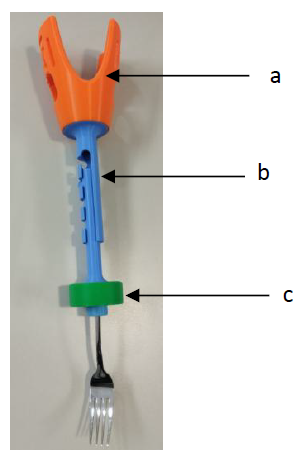
Figure 1: Modules of the multifunctional prosthesis
The modules that make up the system are as follows:
a) “Socket” (Fig. 1-a): This is the part of the prosthesis that attaches to the user. It is designed using a scan of the patient’s limb to customise it and adapt it to their anatomy. Additionally, there is the option to use a harness around the top of the socket to increase stability and facilitate correct posture for the user.
b) Telescopic system (Fig. 1-b): This is the body of the device, consisting of a variable-length extension system using an outer and inner tubular component that allows the user to adjust the length of the prosthesis to up to four different positions. This system comprises a coupling mechanism (hammer-type or similar) with the socket and a coupling (distal or similar) to the interchangeable gadget.
c) Gadget (Fig.1-c): This is the module that provides the prosthesis with its multifunctionality. It can be easily swapped out, and different gadgets are designed according to the functionality required by the user.
It is worth noting that, thanks to their minimalist and functional design, the connections between the different modules of the prosthesis eliminate the need for any external fasteners, simplifying assembly, reducing points of failure, improving the cleanliness and hygiene of the device, and facilitating its adaptation to different users without the need for additional tools.
MAIN ADVANTAGES OF THE TECHNOLOGY
It is worth highlighting the numerous advantages of the device:
• The alternative devices mentioned above operate using cables or electromechanical mechanisms, which increases the cost of the product. However, the prosthesis described in this invention features a design with simple mechanical joints that are manufactured directly using 3D printing. Consequently, the assembly and replacement of modules is straightforward for the user, directly leading to increased self-sufficiency during various activities.
• The socket is easily customisable and adaptable to the user’s anatomy, even allowing for the manufacture of different standardised models and/or models of varying dimensions to ensure a better fit and greater comfort for users. Furthermore, the material used is lightweight, biocompatible, flexible, adaptable and comfortable. Moreover, its simple fit allows the patient to fit the prosthesis themselves in most cases. Additionally, it incorporates a further adjustment at the shoulder to improve posture during prolonged use or for certain functions requiring greater strength.
• The telescopic shaft allows the total length of the prosthesis to be adjusted to suit different scenarios, ensuring the ergonomics and usability of the prosthesis.
• Thanks to the modular design of the device and the ability to easily swap heads depending on the activity, it offers clear advantages over other commercial models, providing different functionalities with a single device. These heads or gadgets can be standard for all users and can be adapted to various everyday tasks (eating, grasping objects, etc.), unlike commercial models, which feature either a very specific hook for a particular task or an aesthetically realistic silicone hand, but with little practical use.
INNOVATIVE ASPECTS
The manufacturing process utilises 3D printing technology, which facilitates rapid customisation and adaptation to different users, without the need for moulds and at low cost. The cup (Fig. 1-a) is manufactured using a flexible, washable, biocompatible material that is comfortable for direct contact with the user, ensuring an ergonomic and comfortable fit during prolonged use. The body of the device (Fig. 1-b and Fig. 1-c) is manufactured using a flexible, impact-resistant material with high heat tolerance. The heat tolerance of this material facilitates cleaning and ensures that its use maintains adequate hygienic standards, for example, when handling food.
A prototype of the prosthesis has been developed and has already been validated by its end users.
Essentially, it is aimed at the assistive and rehabilitation products sector, that is, the range of companies, services and professionals that develop and provide tools to improve mobility, recovery and quality of life for people with injuries, illnesses or physical limitations.
We are seeking manufacturers of assistive and rehabilitation products who are interested in validating and commercialising this product (through licensing agreements) or in designing new devices.
This technology is protected by patent application:
• Patent title: “Prótesis adaptable a una extremidad de un usuario”.
• Application number: P202531260
• Application date: 29/12/2025


Carretera San Vicente del Raspeig s/n - 03690 San Vicente del Raspeig - Alicante
Tel.: (+34) 965 90 9959