
Can we help you?
Contact us

Can we help you?
Contact us
Thank you for contacting us
Your form has been submitted successfully Our team will contact you again as soon as possible.
Whooppss...!! An error has occurred
Try sending later or write an email directly to areaempresas@ua.es

INFO
SHEET
DOWNLOAD
EXECUTIVE
ABSTRACT
CONTACT DETAILS: Research Results Transfer Office-OTRI
University of Alicante
Tel.: +34 96 590 99 59
Email: areaempresas@ua.es
http://innoua.ua.es
The Extremophile Biotechnology research group at the University of Alicante specialises in the study and application of extremophile microorganisms, primarily halophiles (organisms tolerant to high salt concentrations), such as halarchaea, microalgae and cyanobacteria.
Their expertise focuses on enzyme biotechnology, microbial metabolism, the development of high value-added bioactive compounds and bioremediation. Furthermore, they have the capacity to develop stable biocatalysts with a wide range of substrates, and to develop solutions for quality control.
The research group seeks to collaborate with companies and other research centres interested in the development of innovative products and/or processes in the agri-food, cosmetics, health and environmental sectors, amongst others.
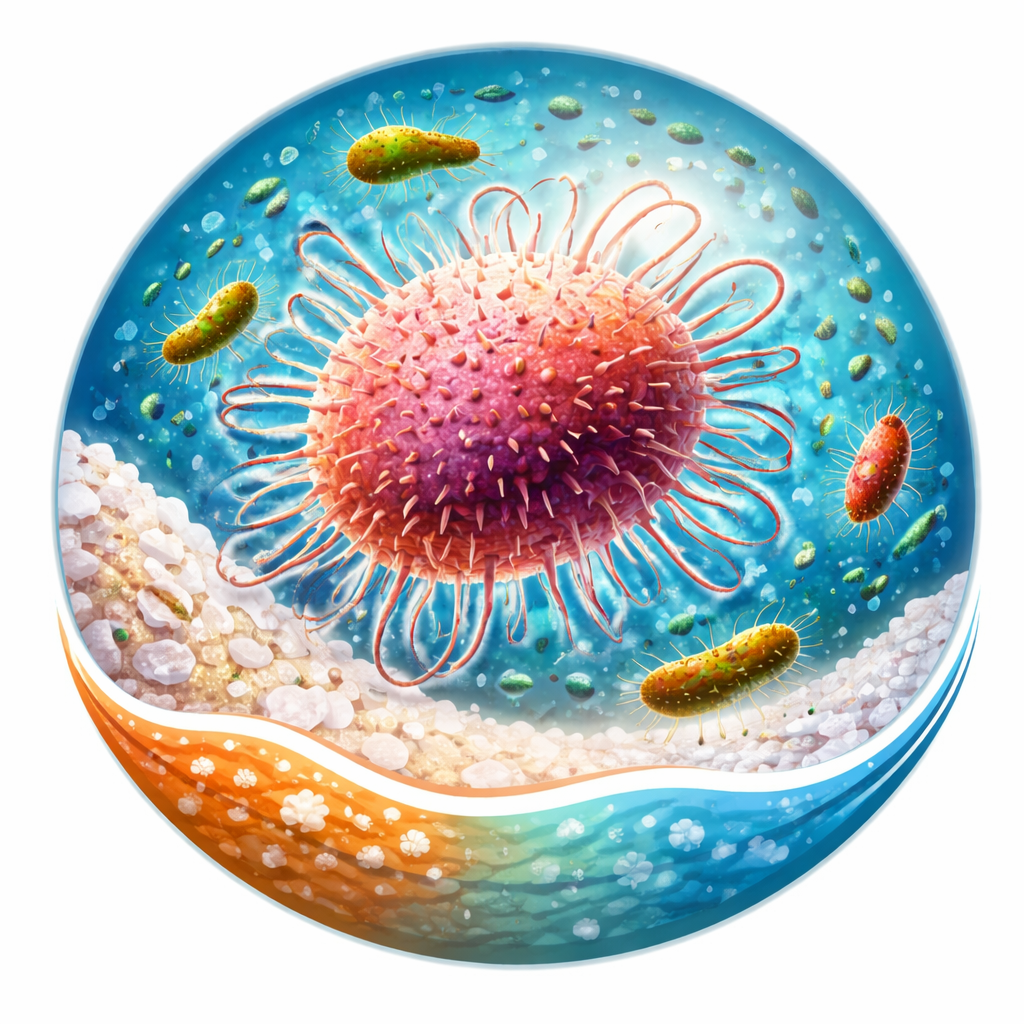
The research group’s track record is underpinned by a strong scientific output and proven expertise, which are essential for ensuring the viability and success of R&D&I projects.
The Extremophile Biotechnology (BiotecExtrem) research group has a solid track record in the study of halophilic microorganisms, including both extreme species from the Archaea domain and moderate species from the Bacteria and Eukarya domains.
The group specialises in analysing, at the molecular level (genomics, proteomics and transcriptomics), the mechanisms these microorganisms develop to adapt to environmental changes and extreme conditions. These mechanisms form the basis of various technologies with applications in different fields. Specifically, in biotechnology, industrial processes (design of biocatalysts, naturally occurring pigments and dyes, etc.) and bioremediation processes for contaminated water and soil, carbon or nitrogen sequestration, or metal recovery, thereby reducing human impact on the environment.
Furthermore, the group specialises in the cultivation and improvement of cyanobacteria and microalgae, as well as in the characterisation and production of high-value derived products.
Its proven track record of competitive projects, high-impact publications and the training of PhD researchers positions the research group as a strategic R&D&I partner, ensuring that the services and technologies offered are based on the most up-to-date and rigorous scientific knowledge.
Main areas of research:
The research group carries out its work in the following scientific areas:
1. Biotechnology of extremophilic enzymes:
• Production, modification (via directed mutagenesis) and determination of 3D structures of enzymes.
• Production of metabolites of biotechnological interest
• Design of biocatalysts with high thermal stability and a broad substrate utilisation range.
• Determination of the structural basis of extremophilia.
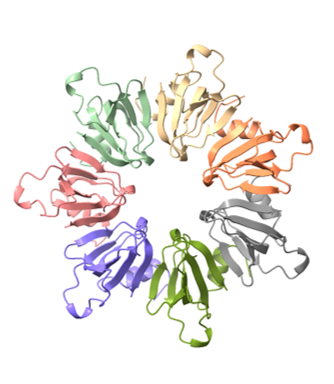
2. Metabolism in halarchaea:
• Purification and characterisation of key enzymes in specific metabolic pathways.
• Physiological studies under stress conditions.
• Construction and characterisation of knockout mutants
• Analysis of gene expression involved in metabolic pathways: nitrogen assimilation, utilisation of different carbon sources and incorporation of sulphur into biomolecules.
• Studies on the regulation of carbon, nitrogen and sulphur metabolic pathways.
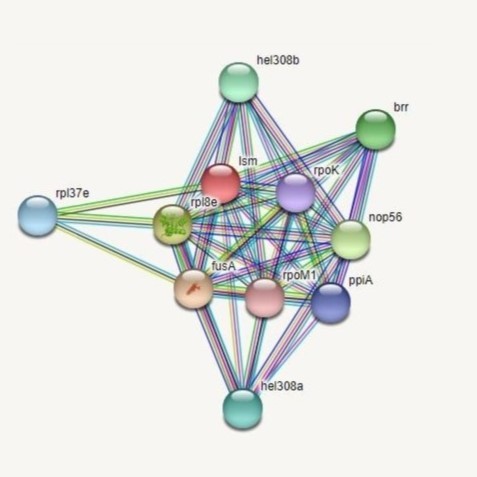
3. Omics techniques applied to halophilic organisms:
• Proteomics and transcriptomics studies under different conditions, including transcriptomics under stress conditions.
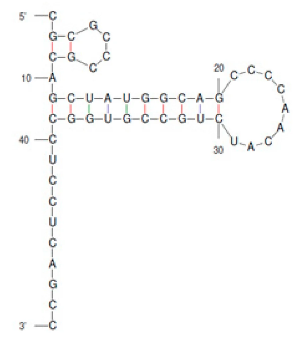
• Identification and characterisation of small RNAs, which play a crucial role in post-transcriptional regulation.
4. Production of bioactive compounds through the genetic improvement and cultivation of phytoplankton:
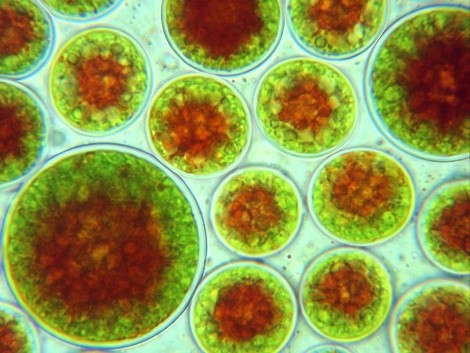
• Cultivation of various species of microalgae and cyanobacteria.
• Study of the influence of cultivation conditions on nutritional profiles.
• Production of high value-added compounds (pigments, biostimulants, antibacterials, antifungals, antivirals, biopolymers, nutraceuticals, etc.).
5. Bioremediation using halophilic microorganisms:
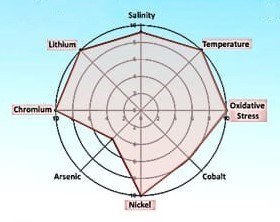
• Physiological characterisation of halophilic archaea, microalgae and cyanobacteria under stress conditions (salinity, temperature, metals, oxidative stress, nitrogen, etc.). Tolerance studies.
• Study of proteins and transcriptional regulators involved in stress responses.
• Search for new halophilic organisms from contaminated samples.
6. Use of molecular biomarkers:
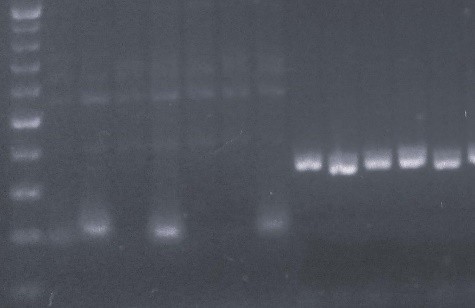
• Development and use of molecular markers as a tool for quality control and the identification of plant varieties.
Services offered:
• Development of protein purification methods.
• Protein characterisation.
• Gene cloning and sequencing.
• Enzymatic assays.
• Overexpression of recombinant proteins.
• Functional studies of proteins using targeted mutagenesis.
• Cell cultures of halarchaea and photosynthetic microorganisms.
• Protein identification using mass spectrometry techniques.
• Design of molecular markers for the determination of plant varieties.
• Analysis of ancient DNA.
• Identification of microorganisms from environmental simples.
• Design of small-scale photobioreactors.
• Determination of amino acid and fatty acid profiles.
• Studies of tolerance to heavy metals: chromium, lithium, arsenic.
Analytical and characterisation infrastructure:
The group has advanced equipment for the analysis and characterisation of biological molecules. Notable among this equipment are:
• High-performance liquid chromatography (HPLC): equipped with a fluorescence detector and autosampler, essential for the separation, identification and quantification of compounds.
• Jasco spectrofluorometer: equipped with a stop-flow module, enabling ultra-rapid enzyme kinetics studies.
• Isothermal titration calorimeter (ITC): essential for studying the thermodynamics of molecular interactions (e.g., enzyme-substrate binding, protein-ligand binding).
• Flow cytometer.
• UV-visible spectrophotometers.
• Microplate reader.
• Electrophoresis techniques: systems for protein and nucleic acid electrophoresis, including a specialised system for 2D electrophoresis (separation of proteins from a complex sample), as well as a gel imaging system (digital camera, transilluminator and analysis software).
• Microscopes.
• Thermocyclers.
The following equipment is available for the cultivation and handling of microorganisms, genetic material and proteins, and for process scaling:
• Fermenters: available with 2- and 5-litre vessels, required for the scale-up cultivation of microorganisms (haloarchaea, microalgae, cyanobacteria) and biomass production.
• Orbital incubators: with temperature control over a wide range.
• Culture incubators.
• Culture chamber for the growth of photosynthetic microorganisms.
For the handling and collection of high-purity samples, the following preparation and purification equipment is available:
• Chromatography systems: including equipment such as Gradifrac and Aka Prime, fraction collectors and peristaltic pumps, vital for the purification of proteins and other biomolecules.
• Ultracentrifuge, centrifuges and microcentrifuges.
• Sonicators and ultrasonic baths: for cell lysis and sample preparation.
• Tangential flow filtration system and protein concentration system.
This infrastructure demonstrates the group’s capacity to undertake projects ranging from molecular biology and protein engineering to culture scaling and advanced structural characterisation.
The research group’s expertise is distinguished by:
1. Developing high-performance proteins and enzymes: these are enzymes that are extremely stable (both thermally and chemically) due to their extremophile origin, enabling their use in more efficient industrial processes and under extreme conditions.
2. Providing specific environmental solutions (bioremediation): thanks to knowledge of the metabolic pathways involved in the adaptation mechanisms of extremophile organisms to stressed environments, it is possible to develop different systems and processes for the bioremediation of contaminated soil and water or for carbon sequestration, thereby reducing anthropogenic impact.
3. Provide robust R&D&I capabilities: the group has extensive experience in omics techniques (proteomics and transcriptomics), protein engineering (directed mutagenesis) and the cultivation of microorganisms.
4. Producing high-value products through the cultivation of microalgae and cyanobacteria: these microorganisms are a source of a wide range of bioactive compounds of interest due to their nutritional, antioxidant, cardioprotective or neuroprotective properties; their antiviral, antibacterial or antifungal activity; or their potential use as biopolymers, amongst other applications. Whether for use as a food source or for the production of other bioactive compounds, these microorganisms are a resource that does not compete with other sectors such as agriculture or livestock farming. Furthermore, their ability to capture CO2 helps to reduce the carbon footprint of production processes.
In its early years, the group focused on the analysis of carbon and nitrogen metabolism, with a particular emphasis on the characterisation of enzymes with biotechnological applications and the design of biocatalysts with high substrate versatility and remarkable thermal stability. Key advances include the expression and determination of three-dimensional structures of halophilic proteins, the generation of point mutants, and the study of the structural basis of extremophilia.
The incorporation of omics techniques (genomics, proteomics and transcriptomics) has opened up new lines of research focused on the regulation of gene expression of proteins of interest in the study of metabolic processes and responses to stress conditions. These studies have contributed to the identification not only of regulatory factors at the transcriptional level, but also of small RNAs that play a crucial role in post-transcriptional regulation. This dynamic association has enabled the establishment of gene-regulatory networks (GNRs) and represents one of the greatest challenges in research into microorganisms belonging to the Archaea domain.
More recently, BiotecExtrem has launched a research programme focused on the identification and characterisation of halophilic microorganisms with potential for the bioremediation of environments contaminated with metals, including both heterotrophic and photosynthetic organisms. In parallel, studies are also being conducted to analyse the nutritional value of microalgae under various cultivation conditions, such as the nitrogen source or light transmission in the photobioreactor.
The research group’s knowledge and expertise can be applied in the following sectors:
• Cosmetics industry: The properties of certain derivatives of halophilic organisms, such as carotenoids (antioxidants) and exopolysaccharides, make them valuable ingredients for skincare products.
• Agri-food: Use of biostimulants and biopesticides produced through the cultivation of microalgae and cyanobacteria. Production of functional ingredients. Use of microalgae derivatives in animal feed (aquaculture and livestock farming).
• Health: Production of cardio- and neuroprotective compounds through the cultivation of microalgae and cyanobacteria. Development of surface disinfectant formulations.
• Textile and tanning industries: Use of pigments and dyes obtained from cultures of extremophile microorganisms. Use of halophilic enzymes at different stages of production.
• Packaging industry: Use of biopolymers produced by halophilic organisms.
• Industrial biotechnology: Application of extremophilic enzymes as biocatalysts in industrial processes requiring thermal stability or in the production of metabolites of interest.
• Environmental sector: In bioremediation solutions for the removal of contaminants from soil and water (metals or nitrogen compounds), or as CO2 sinks.
• Algae sector: This is a sector whose development is being promoted within the European Union. Genetic improvement of microalgae, as well as advancements in their cultivation processes, will facilitate the production of high-value products, as well as their use as carbon sinks in bioremediation projects.
It is looking for companies or organisations interested in:
• Commissioning R&D&I services for the development of new products or processes based on extremophile enzymes or halophilic microorganisms.
• Establishing collaborative projects to optimise and scale up the production of bioactive compounds (microalgae/cyanobacteria), to develop bioremediation solutions or to open up new lines of research.
• Utilising the group’s specialised services, which include:
o Development of methods for protein purification and characterisation.
o Gene cloning and sequencing.
o Overexpression of recombinant proteins.
o Functional studies of proteins and enzymatic assays.
o DNA analysis.
o Design of molecular markers for the identification of plant varieties.
o Identification of microorganisms in environmental samples or wastewater.
o Design and manufacture of small-scale photobioreactors.
o Biomass characterisation: lipid and amino acid profiles.
The technologies developed and described in this technology offer are protected by the research group’s know-how.
Molecular Biology and Biotechnology
Footwear and Textile
Pollution and Environmental Impact
Pharmacology, Cosmetics and Ophthalmology
Medicine and Health
Chemical Technology


Carretera San Vicente del Raspeig s/n - 03690 San Vicente del Raspeig - Alicante
Tel.: (+34) 965 90 9959