
Can we help you?
Contact us

Can we help you?
Contact us
Thank you for contacting us
Your form has been submitted successfully Our team will contact you again as soon as possible.
Whooppss...!! An error has occurred
Try sending later or write an email directly to areaempresas@ua.es

INFO
SHEET
DOWNLOAD
EXECUTIVE
ABSTRACT
CONTACT DETAILS: Research Results Transfer Office-OTRI
University of Alicante
Tel.: +34 96 590 99 59
Email: areaempresas@ua.es
http://innoua.ua.es
Researchers from Department of Inorganic Chemistry at the University of Alicante have developed a new type of catalyst based on a monolithic structure with internal channels. It is characterised by an active copper metal substrate and an intermediate layer of copper oxide on which a dispersed phase of cerium oxide is deposited.
The main advantage over current monolithic catalysts is that both the monolithic copper structure and the intermediate layer and dispersed phase exhibit catalytic activity, making it a highly active and selective catalyst, particularly suitable for efficiently removing carbon monoxide from hydrogen-rich streams from hydrocarbon reforming.
Companies interested in acquiring this technology for commercial exploitation are sought.

Conventional manufacturing of monoliths as catalytic supports is based on inert ceramic or metal substrates onto which an active phase, usually a noble metal or a mixture of oxides, is deposited. In these systems, most of the bed mass does not participate in the reaction, which requires the use of larger volumes of catalyst to achieve the desired conversion. In addition, traditional extruded monoliths are made up of straight, parallel channels, which restricts mass transfer and turbulence generation, critical factors for the efficiency of processes such as selective carbon monoxide (CO-PROX) oxidation in hydrogen-rich streams.
On the other hand, 3D printing offers the possibility of designing monoliths with internal channels with complex geometries, favouring turbulence and radial diffusion. However, to date, it has not been possible to combine this technology with a copper monolith whose structure is itself catalytic.
The present invention overcomes the limitations described above by manufacturing a monolithic copper catalyst with an internal channel structure specifically designed to optimise the chemical process, where the copper itself acts as an active support. When subjected to a sintering process in an inert atmosphere and subsequent exposure to air, an intermediate layer of copper oxide forms on the internal surface of the monolith. A dispersed phase of cerium oxide (CeO2), either pure or doped with other metals, is deposited on this layer. In this way, the catalytic activity is distributed across three layers: metallic copper, intermediate copper oxide and dispersed cerium oxide, creating a CeO2/CuO/Cu interface that promotes redox exchange and oxygen mobility, which is essential for the oxidation of carbon monoxide (CO) without consuming hydrogen (H2). In this way, the total mass of the monolith contributes directly to the catalytic reaction, reducing the volume of the reactor required and improving thermal and mechanical efficiency.
Overall, the proposed technology offers a comprehensive solution that increases catalytic activity, optimises mass transfer and allows the manufacture of monoliths with customised geometries, surpassing the current state of the art.
The technology consists of a monolithic copper (Cu) catalyst which, unlike current supports, has its own activity thanks to its composition and the arrangement of its active phases. The core of the material is a solid copper block manufactured using three-dimensional printing with a filament containing at least 80% copper and a thermoplastic polymer (e.g. polylactic acid -PLA-). After printing, the filament undergoes a depolymerisation process, removing the PLA and leaving a metallic structure with internal channels that can be designed in a homogeneous or heterogeneous manner. In the next phase, the monolith is sintered in an inert atmosphere at temperatures between 550°C and 1060°C with the piece immersed in alumina powder and covered with sintered carbon to limit oxidation. When removed from the furnace and exposed to air, a layer of copper oxide (CuO) naturally deposits on the inner surface of the channels (see Figure 1).
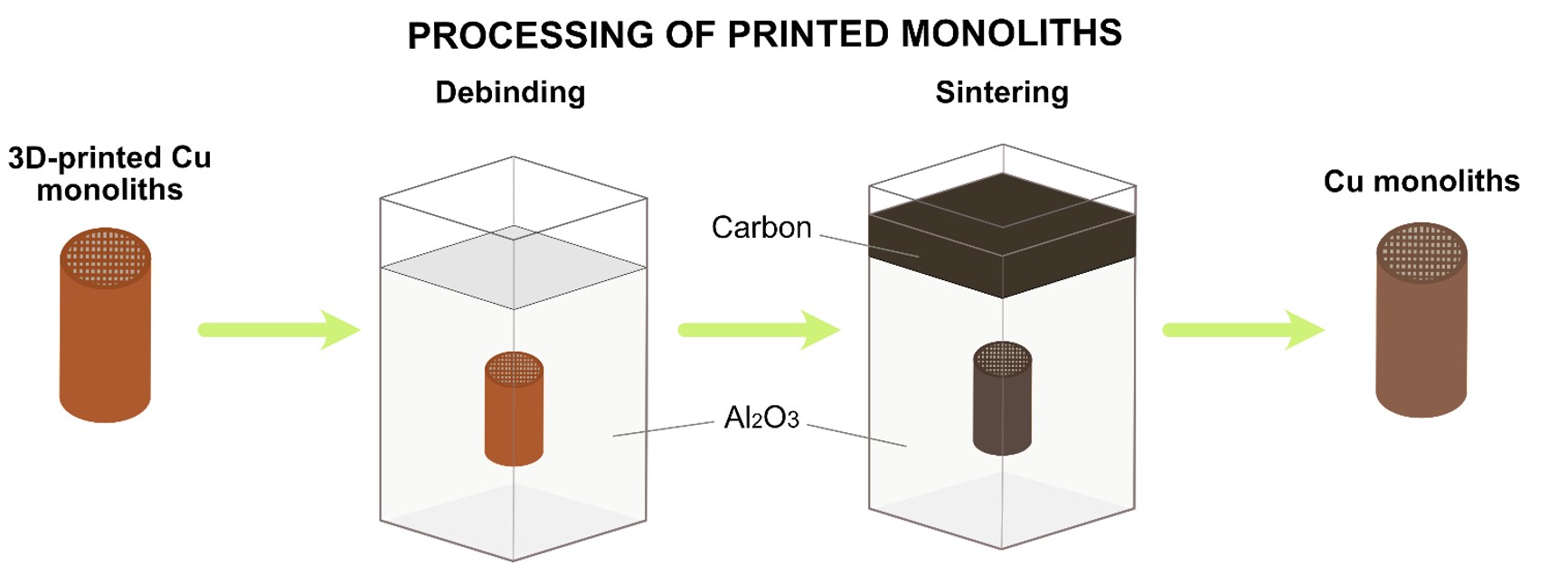
Figure 1: Manufacturing diagram for copper monoliths produced using 3D printing technology, covering the depolymerisation of the part, followed by sintering in an inert atmosphere.
The next step (see Figure 2) consists of covering the external surface of the monolith with a layer of Teflon, which prevents dust from the active phase from adhering to the outside and ensures that the load is concentrated solely on the internal channels. A suspension of cerium oxide (CeO2), either pure or doped with noble metals, is prepared in a suitable dispersion medium. The suspension is introduced into the monolith by controlled immersion or drop-by-drop infiltration and left to dry in a rotating device to ensure uniform distribution within the channels. After drying at room temperature and heat treatment for stabilisation, the cerium oxide layer is fixed onto the copper oxide layer, generating a labile CeO2/CuO/Cu interface that is responsible for the catalytic activity.
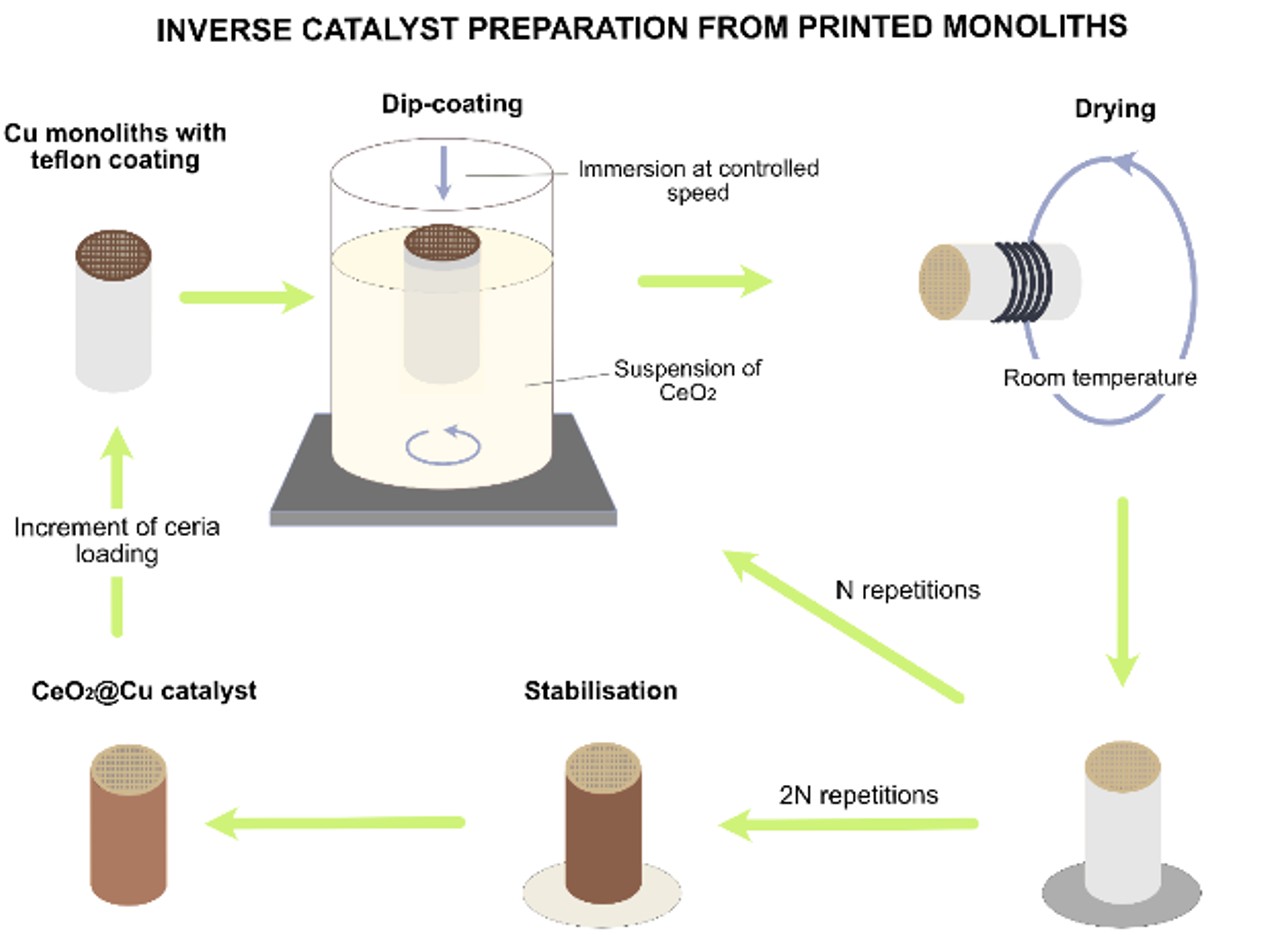
Figure 2: Diagram of the procedure for depositing CeO2 onto copper monoliths manufactured using 3D printing technology.
The result is a catalyst where most of the mass is active, and the cerium phase constitutes only 0.1%–5% of the total weight. The monolithic structure allows the reaction to occur throughout the entire volume of the bed, reducing pressure drop and improving heat and mass transfer. The internal channels can be designed with complex geometries: ‘honeycomb’ with straight parallel channels, ‘symmetrical matrix’ with channels of constant but tortuous cross-section, and ‘asymmetrical matrix’ with variable cross-section along the flow (see Figure 3).
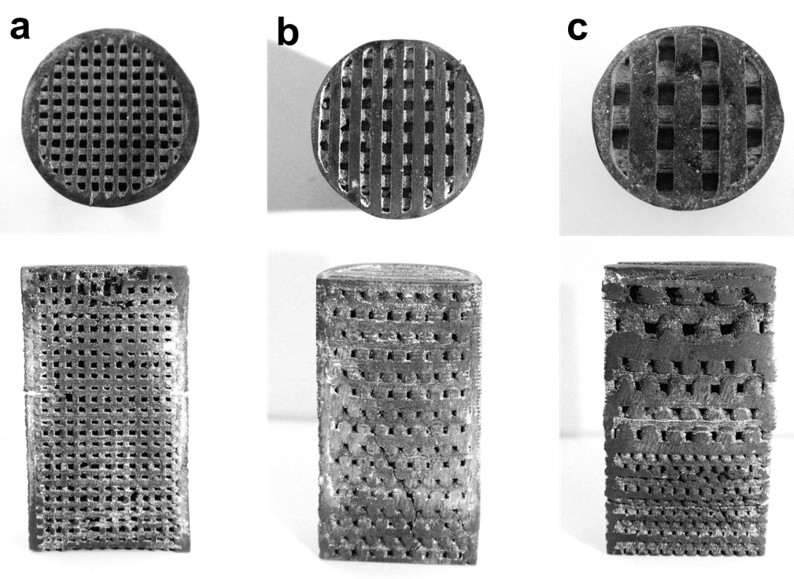
Figure 3: Front and cross-sectional photographs of the monolithic catalysts obtained in three different configurations: (a) straight parallel honeycomb channels with homogeneous distribution of internal channels, (b) uniform symmetrical matrix with homogeneous distribution of internal channels, and (c) decreasing asymmetrical matrix with heterogeneous distribution of internal channels.
Taken together, the patent describes the entire manufacturing process, which consists of: 3D printing, depolymerisation, sintering, passivation, surface coating of the monolith with Teflon, suspension preparation, deposition, rotary drying and thermal stabilisation, with each stage optimised to maximise the catalytic activity and durability of the monolith.
ADVANTAGES OF THE TECHNOLOGY
This technology offers the following advantages:
1) The active monolith has a higher catalytic surface area per volume, reducing the amount of material required.
2) The use of copper, a cheap and abundant metal, reduces material costs compared to catalysts containing noble metals, without sacrificing performance.
3) The intermediate CuO layer improves CeO2 adhesion, facilitating electron transfer and increasing catalytic activity.
4) CeO2 dispersion provides additional oxidation sites and promotes selectivity towards CO2 without oxidising hydrogen.
5) The 3D channel design optimises turbulence and radial diffusion, reducing the reaction start temperature and improving thermal efficiency.
6) The copper monolith has superior thermal and mechanical conductivity, reducing pressure loss compared to ceramic monoliths.
7) Scalability: 3D printing allows the production of parts of any geometry, size and shape, adapting to different reactor configurations.
8) Compatibility with existing chemical processes: it can be integrated into existing reforming lines and hydrogen purification systems without significant structural changes.
The high activity and selectivity of this innovative catalyst, combined with lower pressure drop and thermal robustness, make this technology very attractive to the energy and environmental industries.
INNOVATIVE ASPECTS OF THE TECHNOLOGY
This innovative catalyst combines a monolithic copper structure with an intermediate layer of CuO and a dispersed phase of CeO2 (pure or doped). The entire mass, not just the active phase, is catalytic, which increases the useful surface area and reduces pressure drop.
The sintering process in an inert atmosphere and subsequent passivation create a highly active CeO2/CuO/Cu interface for the selective oxidation of CO in hydrogen-rich streams, with greater activity and selectivity than traditional monoliths on inert supports.
In addition, the manufacture of the monolith by 3D printing allows the creation of homogeneous or heterogeneous channel designs, generating turbulence and better radial diffusion. This design flexibility opens the door to specific adaptations for each industrial chemical process, positioning the technology as a competitive and scalable option for the next generation of hydrogen purification systems.
Therefore, the innovation lies in the fact that most of the mass of the catalytic bed is active, which reduces the required reactor volume and improves heat and mass transfer. This innovation opens the way to more efficient and compact processes in the production of hydrogen and clean fuels.
The technology has been developed on a laboratory scale with functional prototypes. Copper monoliths have been manufactured using 3D printing, followed by sintering and passivation treatment, which generates an intermediate layer of copper oxide. Cerium oxide particles are deposited on this layer, resulting in a structure with catalytic activity distributed throughout the metal matrix itself, the intermediate layer and the dispersed phase.
Selective carbon monoxide (CO-PROX) oxidation experiments in hydrogen-rich streams show that tortuous designs have a lower reaction start temperature and higher 50% conversion (T50) than the honeycomb-designed monolith, with a reduction of approximately 7% (see Figure 4):
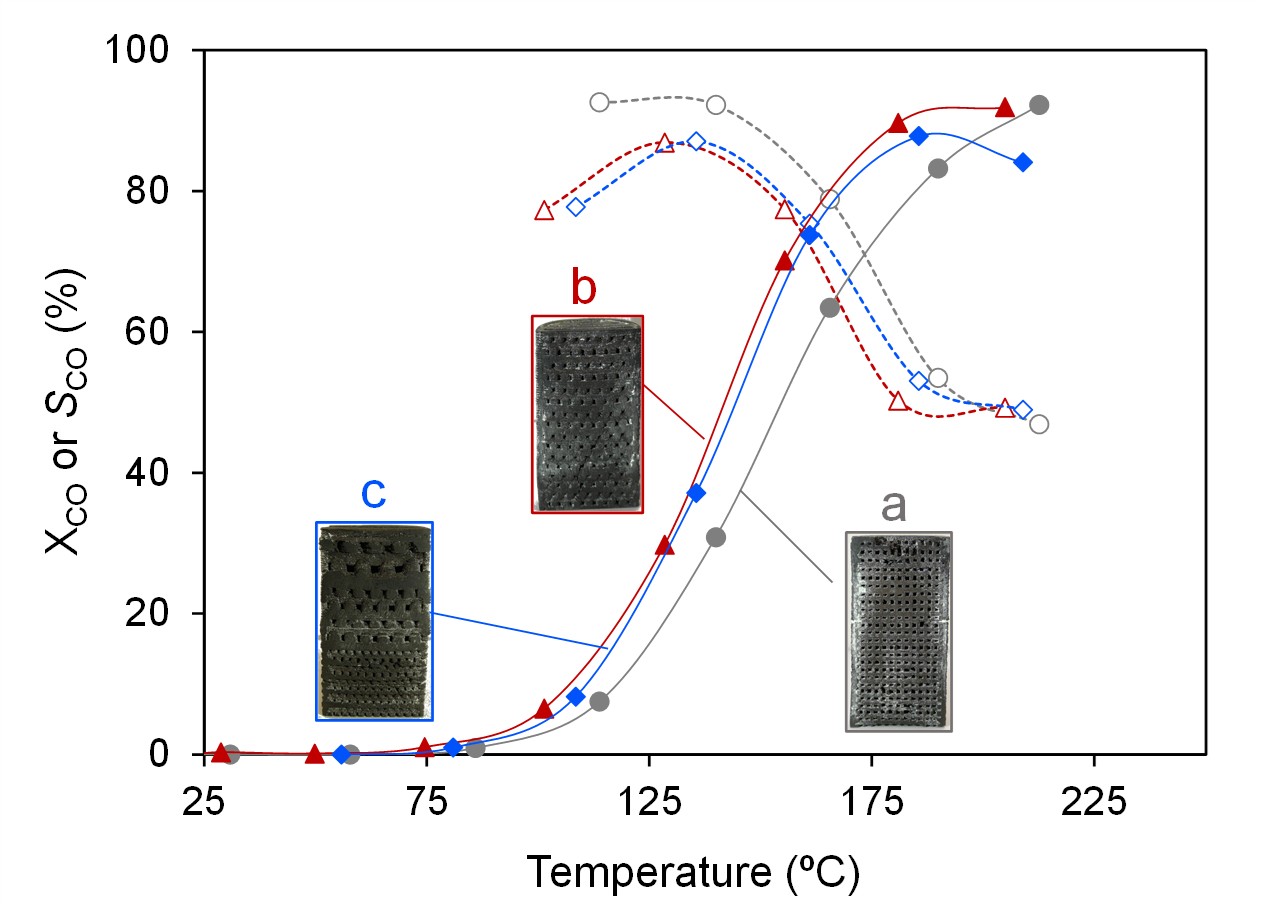
Figure 4: CO-PROX activity results in CO-PROX catalytic experiments in fixed bed (100 mL/min 1% CO, 1% O2, 30% H2) expressed as CO conversion (solid line) and CO2 selectivity (dotted line) for monolithic copper catalysts. Comparison of different designs: honeycomb (a), symmetrical (b) and asymmetrical (c).
Furthermore, sintering at high temperatures (1050 °C) reduces the oxygen reserve in copper, which improves selectivity towards CO2 by preventing hydrogen oxidation (see Figure 5):
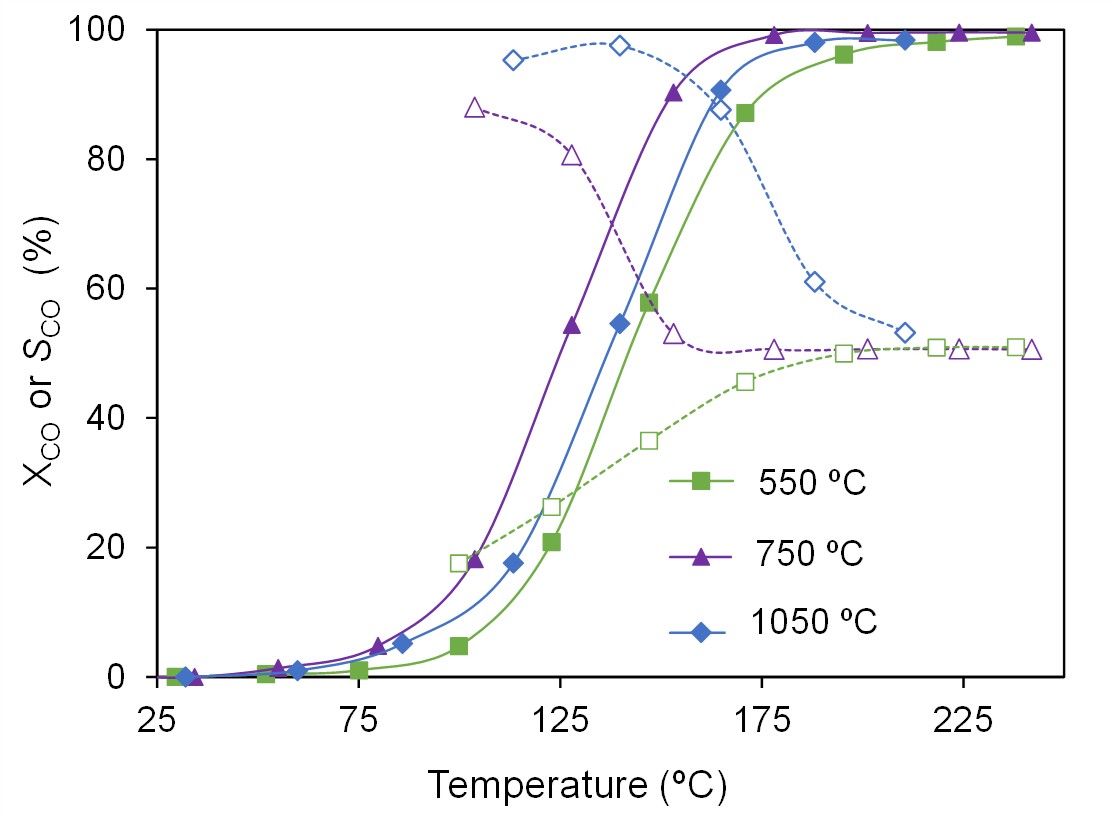
Figure 5: CO-PROX activity results in CO-PROX fixed bed catalytic experiments (100 mL/min 1% CO, 1% O2, 30% H2) expressed as CO conversion (solid line) and CO2 selectivity (dotted line) for monolithic copper catalysts. Comparison of the activity of catalysts synthesised at different sintering temperatures.
Finally, the monoliths were characterised by scanning electron microscopy (see Figure 6).
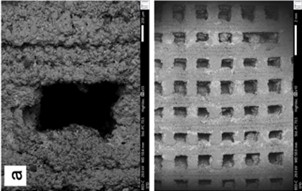
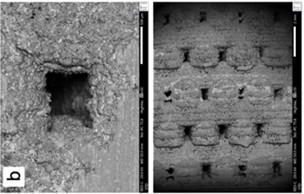
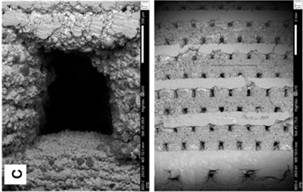
Figure 6: Scanning Electron Microscopy (SEM) images of the cross-section of CeO2/CuO/Cu monolithic catalysts with the following designs: (a) straight parallel honeycomb channels, (b) uniform symmetrical matrix, and (c) decreasing step asymmetrical matrix.
This innovation offers a monolithic copper catalyst with cerium for the selective removal of carbon monoxide in hydrogen-rich streams. Its applications cover sectors relevant to the environment and emissions control in the chemical and petrochemical industries.
Among the main sectors of application are:
• Hydrogen purification in hydrocarbon reforming plants (natural gas, biogas, etc.) using CO-PROX.
• Pre-treatment of gases for fuel cells (pure hydrogen for PEM, SOFC, etc.).
• Control of carbon monoxide in chemical synthesis processes (methanol, ammonia, etc.).
• Decontamination of industrial gases containing carbon monoxide and hydrogen (petrochemical industry, refineries, etc.).
• Renewable energy applications where hydrogen free of CO impurities is required for storage and transport.
It is looking for companies interested in acquiring this technology for commercial exploitation through patent licensing agreements.
Company profile sought:
• Companies with the capacity to produce and market advanced catalysts, especially in the energy, petrochemical or environmental sectors.
• Companies that carry out hydrocarbon reforming processes and seek to optimise the purification of the hydrogen stream.
• Companies operating in the production of clean and sustainable fuels (methane, methanol, etc.) that require highly selective carbon monoxide removal systems.
Types of companies sought:
1. Manufacturers of industrial catalysts.
2. Suppliers of equipment and solutions for green hydrogen production.
3. Hydrocarbon and natural gas reforming companies.
4. Industrial gas and emissions treatment companies.
5. Manufacturers of combustion and power generation systems with a focus on low emissions.
6. R&D&I companies in catalysis and advanced materials.
7. Technology start-ups focused on the circular economy and CO2 capture.
8. Suppliers of gas purification solutions for the food and pharmaceutical industries.
9. Chemical process engineering and consulting companies seeking to incorporate high-performance catalyst technologies.
10. Government organisations and funding agencies that support the energy transition and emissions reduction.
This invention is protected through patent application:
• Title of the patent: "Catalizador, procedimiento de fabricación del catalizador y uso del mismo".
• Application number: P202531128.
• Application date: 2nd December, 2025.
Materials and Nanotechnology
Chemical Technology
Transport and Automotive


Carretera San Vicente del Raspeig s/n - 03690 San Vicente del Raspeig - Alicante
Tel.: (+34) 965 90 9959